MARCH 2012 - WALK and PHOTOGRAPH COMPONENT:
"RIVER CARIOCA /
RIO CARIOCA"
Walking from Aterro do Flamengo to Cosme Velho, Rio De Janeiro
8th March 2012
7:15PM FULL MOON
Mouth of The River Carioca, Praia do Flamengo
TEXT: "On the boardwalk, seated by the outflow of the Rio Carioca as it reaches and mixed itself with the sea waters of the Guanabara Bay. I had earlier found the playing card the 3 of Clubs on Rua Barão do Flamengo, the street that, since the enclosure of the Rio into a subterranean sewer, carries beneath it the river to this point of exit below these wooden benches. The only clue to the diverted and entombed river is the almost invisible plaque at the junction of Rua Conde de Baependi as it ends and Rua Barão do Flamengo begins, properly known as Praça Jose de Alencar. Here, the plaque is dwarfed by the statue of Jose de Alencar. The new treatment works, of which we will return to later, was constructed not so long ago (2002) to prevent the continuous appearance of what locals were calling 'línguas negras' (black tongues) (1) that were staining the Flamengo Beach each time there was heavy rainfall. The 'black' itself being effluence and excreta from the now failing to cope sewers. I saw a rat on the rocks below as the moon shone down on the leafy green and yellow plants. The rat made its way along the rocks, appearing and disappearing from view until at last it reached the opening to the Carioca River below and made its way into the back again upriver. On the rock spur that was created to guide the outfall from the underground river into the bay, the usual combination of fire and fish was being played out. Folk come here to fish and also the folks who tend to live on the streets near to the beach spend some time in the cold water with nets trying to catch something tasty to cook up usually on large empty vegetable oil cans that are ubiquitous along the sea walk".



9th March 2012
5:05PM
Course of The River Carioca, Largo do Boticario
TEXT: "
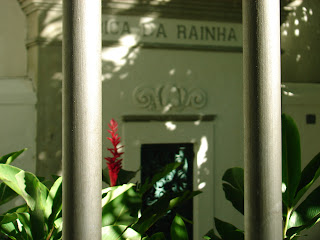
I took a walk backwards today from the place I had began last night. Taking the starting point of the Rio Carioca plaque I walked the entire length of Rua das Laranjeiras and Rua Cosme Velho following the underground sewer that since 1905 (2) encloses the water beneath my feet. Along the way I was able to continue the mapping of the many dry fountains and water features of the Rio terrain and of this I will speak a little later. Here I made a photo of the sewer cover as if to desire to venture below but pretending to be thwarted by the cold iron plate. I was also able to observe Bica da Rainha along the way which has been preserved to this to day to provide somebody or other with natural 'ferruginous' waters although the tap is solidly locked away with big padlock. Every city that pretends its own civilisation provides water for all. In Rio, the efficacy of such features is dubious and people who live in the streets find more relief at the petrol stations were water is provided for free and often with courtesy. Mostly, the public water features of this urban environment are broken and often only a year or so after their 'revitalisation'.
Eventually I came to the bus station and the river now appears in public as its course is preserved by two large concrete channels. There are
other sites (3) such as the reservoir at Ladeira do Ascurra (4) where the river may appear but these are not so easy to
arrive at. I had prepared some maps and photos and may return another day but
today I wanted to see the real wet river and to feel its presence in
the city. Making my way in somewhat of a pointless rush hour way to the rear of the channels I jumped up to photograph the more messy part of the river as it heads back to Largo do Boticario, a curious dead end street that arrives in a square of dilapidated neo-classical houses. There were some friendly interactions with squatters here who had occupied one of the main houses.
At Largo do Boticario the river is almost a river again and it runs back through overgrown greenery like any other normal river and looks amazingly furtive. Finally the walker comes to the Largo do Prof Silva Mello (which The Ruinist has written about here) and there is more concretinisation of the river, the ruined Largo making this the most wild of the river in public. I was poking about on the concrete ledge for some time looking at the rubbish in the river below and then decided to descend a few feet on the steps that appear on the other side of the drop. This being next to the genuine entry of the river into the landscape, it seemed like a good idea. We mused on the dark water and the what rubbish was visible below. Then in a moment of catching the obvious again and moving form reverie to a 'reality' I caught sight of the folks living in the tunnel mouth, their bodies and their belongings all half visible in the gloom and so I bade the river farewell and hoped I hadn't made to much fuss around the domestic hideaway in our desires to follow this water to it's most possible depths. On leaving I saw a rat running through the undergrowth (as I had hoped)".
12th March 2012
5:30PM
Mouth of The River Carioca, Praia do Flamengo
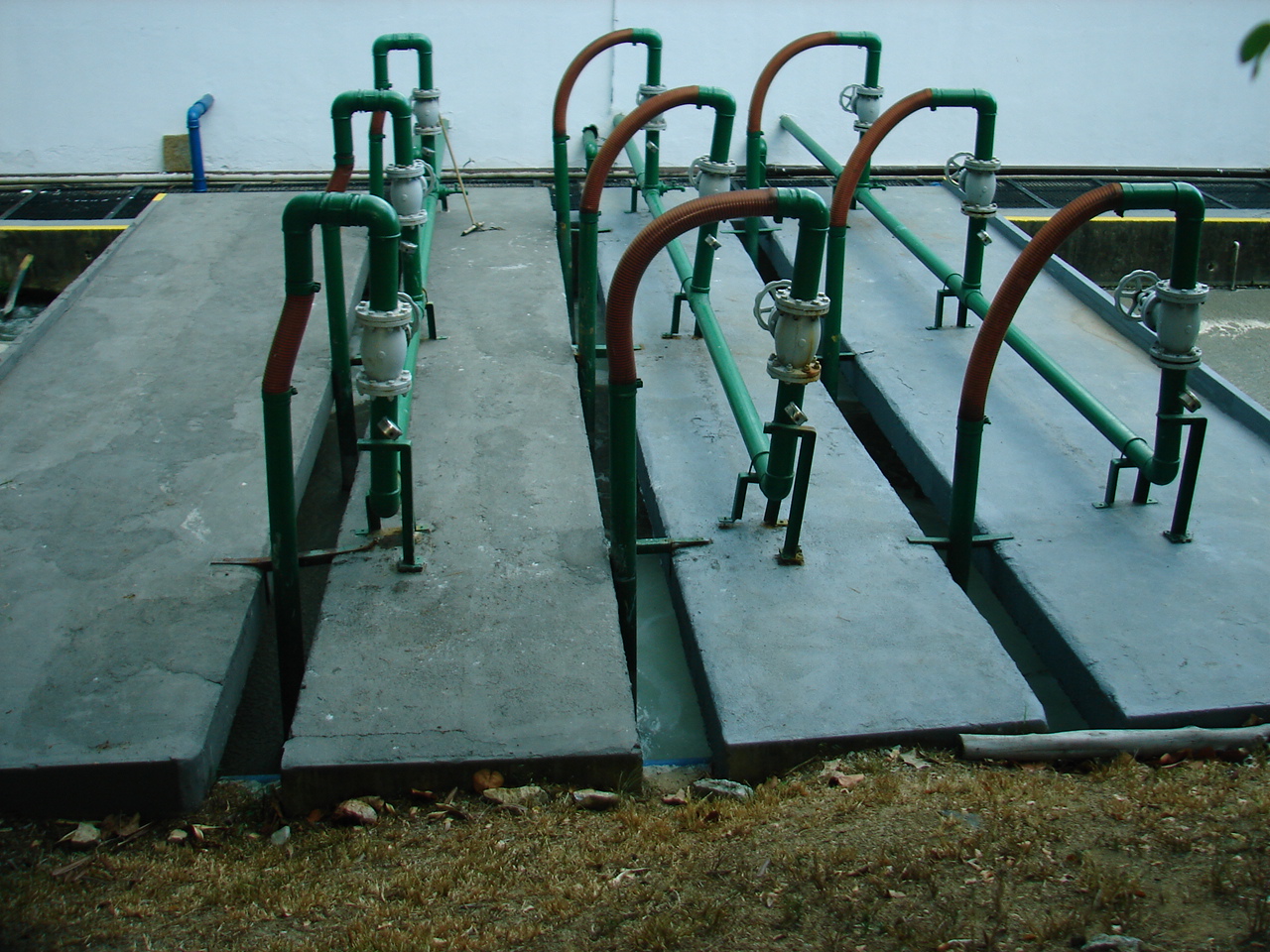
TEXT; 'I came once more in the light time to make a good look around the fancy water treatment works (5) and to follow the curve of the boardwalk as it leaves the plant and covers up again the Carioca River as it flows towards the bay. The wood is criss crossed with lines of holes so you can see the reflection of the light above below in the water. There is little to say here. Notes from the day are sparse and reflect an intrusion as always of 'the real world' upon the source of our contemplation over these last few days. Above on the boardwalk, some Rio hipsters are being interviewed by a TV channel. It's all very painful to watch so I walk once more along the spur to the land's end. I noted the menace of the of the pre-storm in the air, some raindrops, the bay heavy with waves. Far away where the mountains are, there were flashes of lightning and thunder could be heard. People were taking flash photos anyhow of the sea and this was just confusing, flash of lightning and flash of flash for a flash world that could be put up on the telly. Then the hipsters cycled off. Then it rained. Then it was lonely here. I watched a local man in the waves fishing with a net. Once more I watched the fishing activity. I watched for rats below but were unable to see one this time. The slow storm was coming and I waited for it to hit. This was as much of the river as I could discover although so much makes my happiness for this moment".
NOTES and USEFUL INFORMATION
(1)
 Black Tongue as appeared at another Rio beach
(2)
 The Carioca River is enclosed in a sewer beneath the street Rua das Laranjeiras
(3)
(4)
"
The urbanisation of the city of Rio de Janeiro was marked by intense change in the environment and its water bodies. Rivalling with the native cultures, which are suited to the environment, the European colonisation of the 16th century, tried to turn in a short time a tropical region in a European way to the city. This meant a change of space before endowed with large number of rivers. Today, almost all of them had their courses or modified, or are hidden in the form of storm sewers, and still has those that no longer exist. From this perspective the Carioca River stands out. With its original course going through oldest locals of the city, it followed up early the profound changes in space and its history confused with the city. The Carioca River rises in the Massif of Tijuca. Today it is only visible at free surface from its rising to the Largo do Boticário, in front of the Ladeira "Ascurra", then runs by underground galleries and at by the street named Baron of Flamengo, it outflows in the Guanabara Bay. Its history is as important as the history of the development of the city, for the reason which because of its location which emerged the first neighbourhoods of Rio de Janeiro. The name "Carioca" was given around the year of 1503, when, in one of the river stretches near the a hill called Morro da Viúva the Portuguese built a house of masters of slaves, called by the Tamoios Indians "Cari-Óca" (White Man’s House, in Indian language). Where this house existed, disappeared already in the 17th century, today is a modern building in the present corner of the Cruz Lima Street with the Flamengo Beach".
From 'Urban Water Quality after Flooding' by Jorge Henrique Alves Prodanoff and Flavio Cesar Borba Mascarenhas (2010)
From
'The Carioca River Clean-Up: Environmental Movement or Basic Sanitation?' by Johanna W. Looye (1995), a fascinating document that looks at the class politics within the Carioca / Flamengo clean-up campaigns.
(5) '
O Rio Carioca da Cidade do Rio De Janeiro, Brasil: Da sua historio o que preservar?' by Alexandre Pessoa Dias has many historical and contemporary pictures of the Carioca river and the new treatment plant at Flamengo.








 Posts
Posts


